
Upcoming Workshops & Trainings
October 20, 2026 | 11:15 AM–12:45 PM
Working through Displacement: Trauma, Labor and Survival
Lecture and Discussion with Maheen Hyder (MSW, RSW)Scuola Normale Superiore | Palazzo Strozzi, Florence, Italy
Part of Intersectional Solidarity and Labor Organizing: Toward Just and Collective Futures, an international workshop bringing together scholars, labour organizers and grassroots activists.
Drawing on clinical and humanitarian practice, Maheen examines how trauma, forced displacement and precarious legal status shape access to work and the conditions for collective political participation. The conversation considers bureaucratic waiting as a form of institutional control, exploring how prolonged immigration uncertainty constrains autonomy, produces vulnerability to exploitation and disrupts people’s ability to imagine a future. It asks what meaningful solidarity requires when the time, safety and material resources needed to organize are unequally distributed.
VIEW FULL PROGRAMME
Past Trainings and Workshops
September 18, 2026
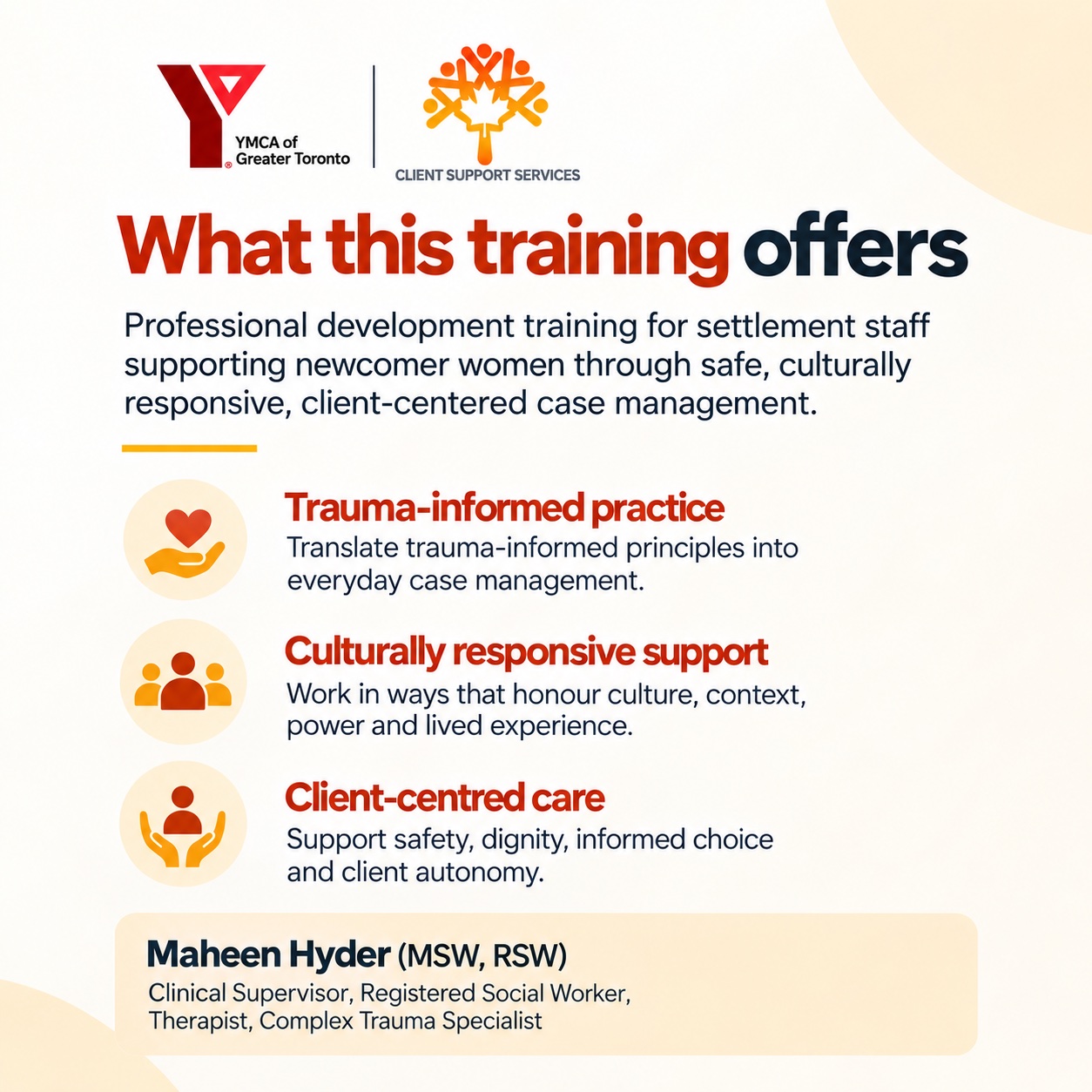
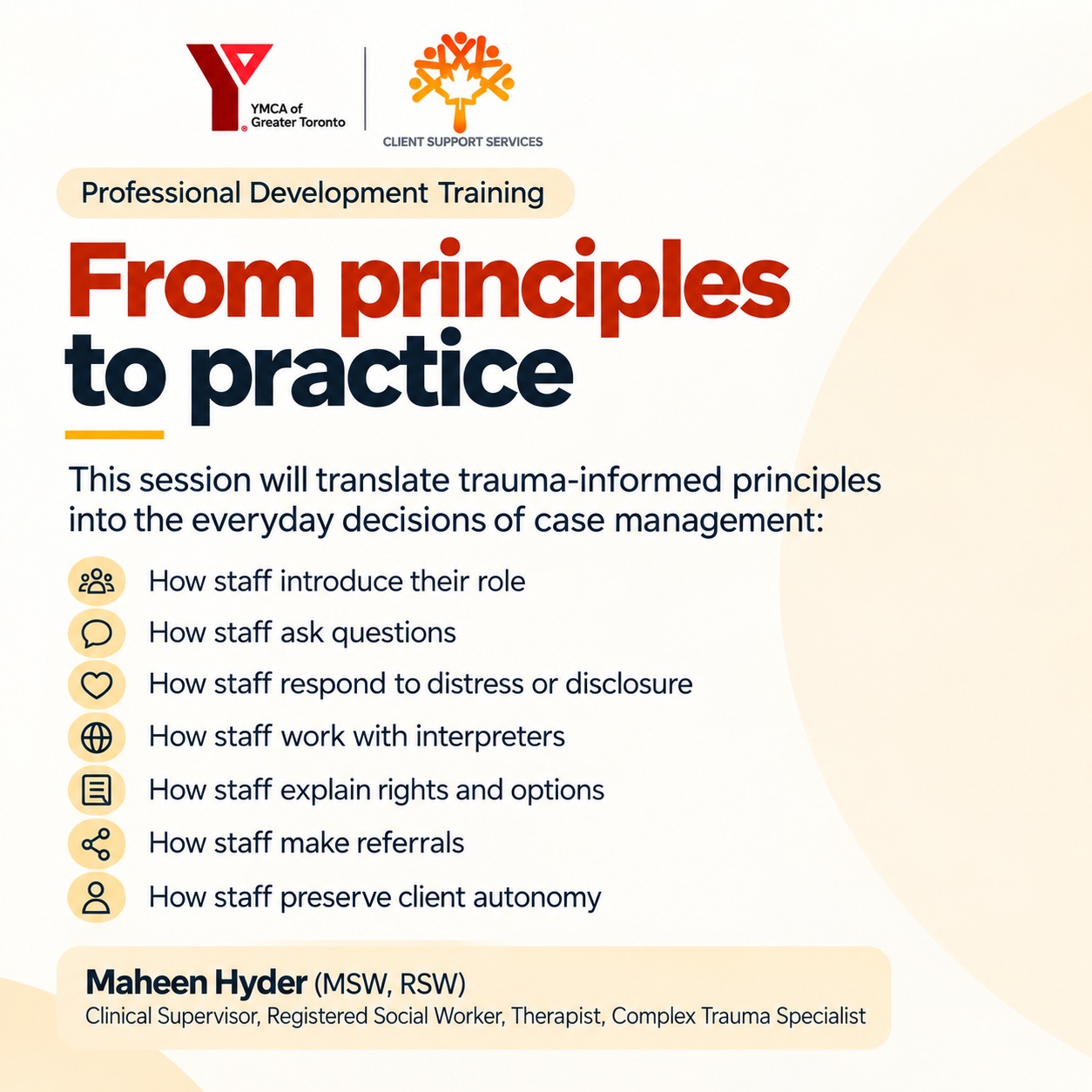
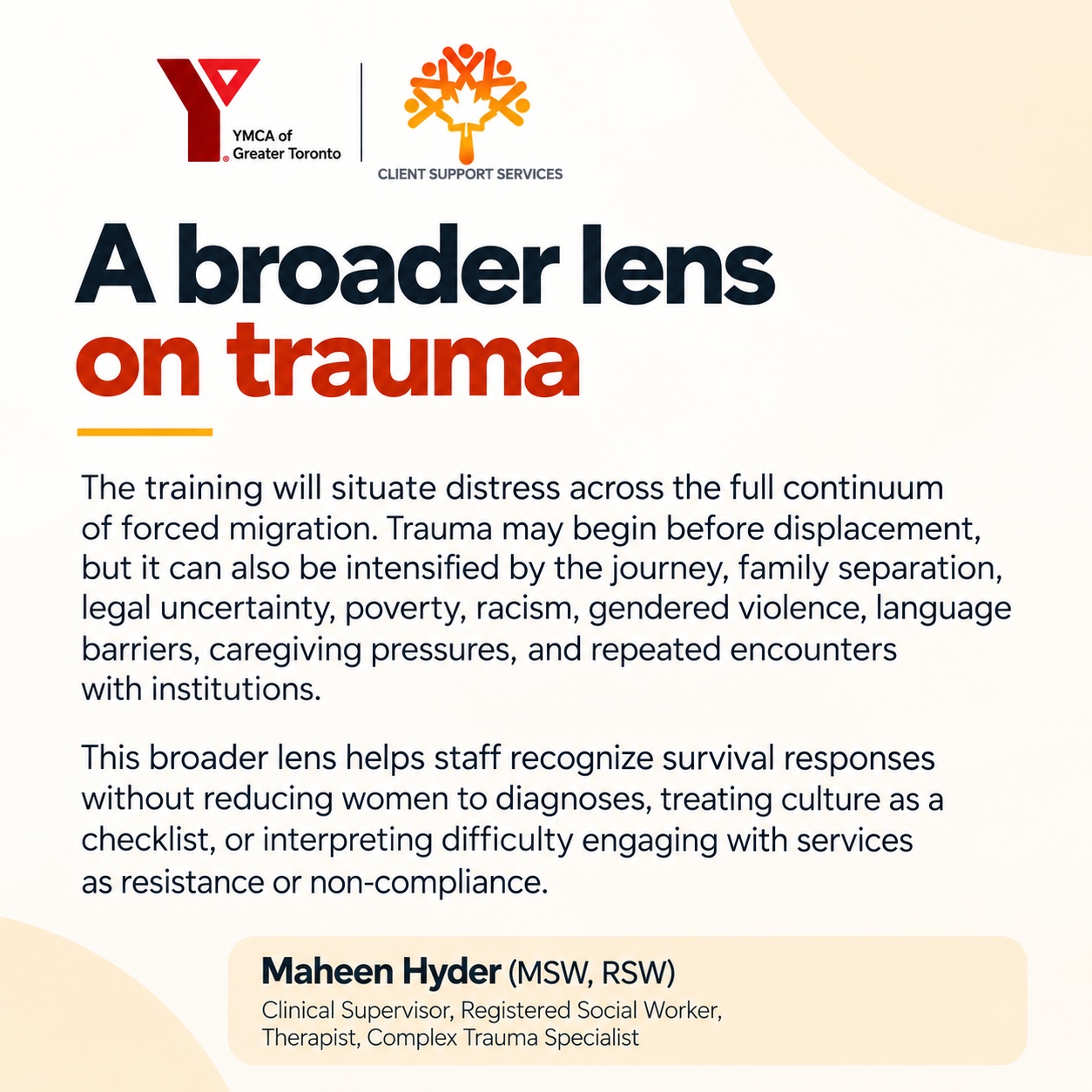
Trauma-Informed, Culturally Responsive Support for Refugee & Newcomer Women
Professional Development Training for Case Managers | YMCAA practical training for case managers and settlement professionals exploring how trauma, migration, displacement, culture, gender and systemic barriers can shape the experiences of refugee and newcomer women — and what thoughtful, culturally responsive support can look like in practice.
REGISTER FOR SEPTEMBER 18 TRAINING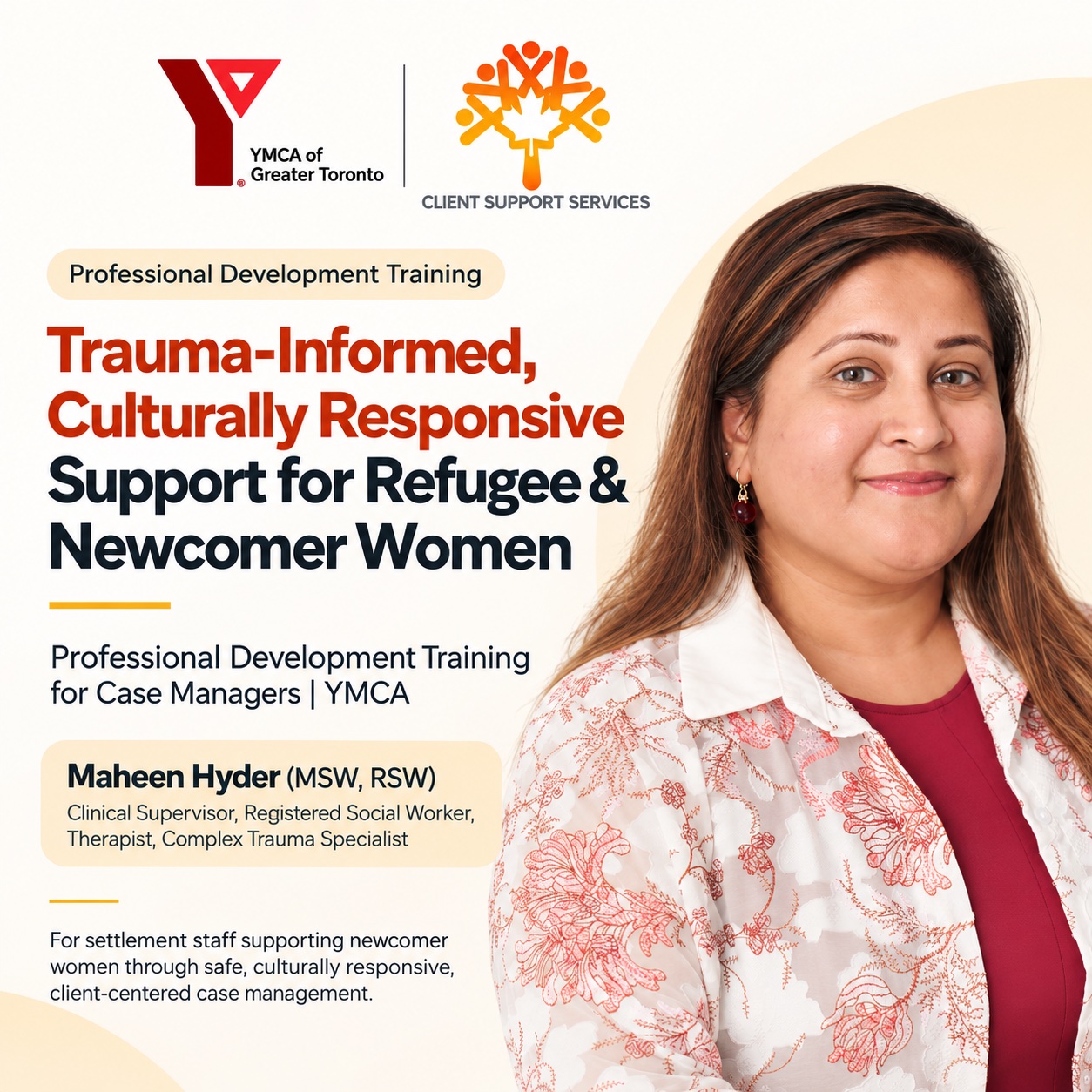
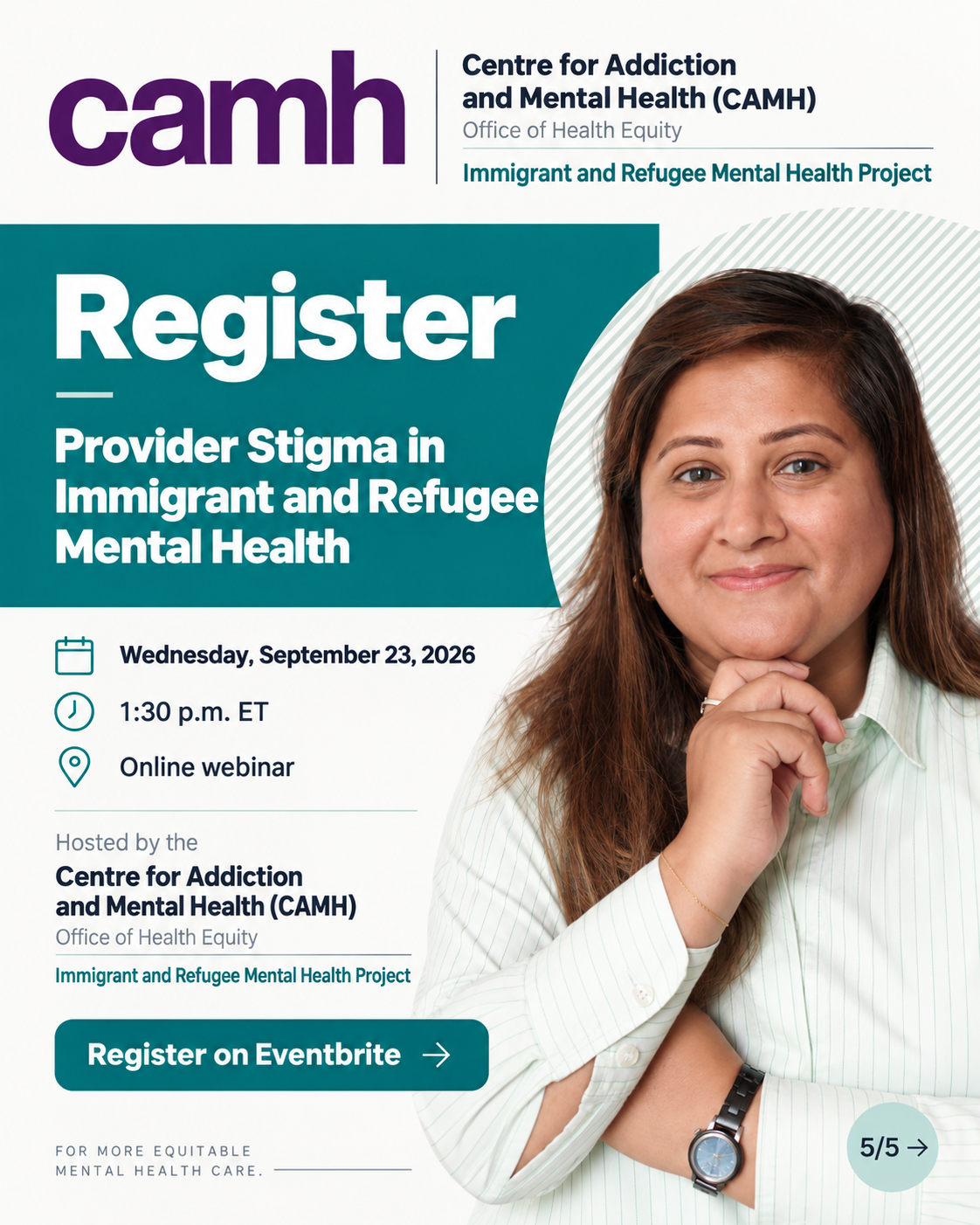
September 23, 2026
Provider Stigma in Immigrant and Refugee Mental Health: Impacts on Engagement, Access, and Outcomes
Immigrant and Refugee Mental Health Project | CAMHA webinar examining how provider assumptions and stigma can affect trust, disclosure, clinical decision-making, treatment planning, access to care and treatment outcomes.
REGISTER FOR SEPTEMBER 23 WEBINAR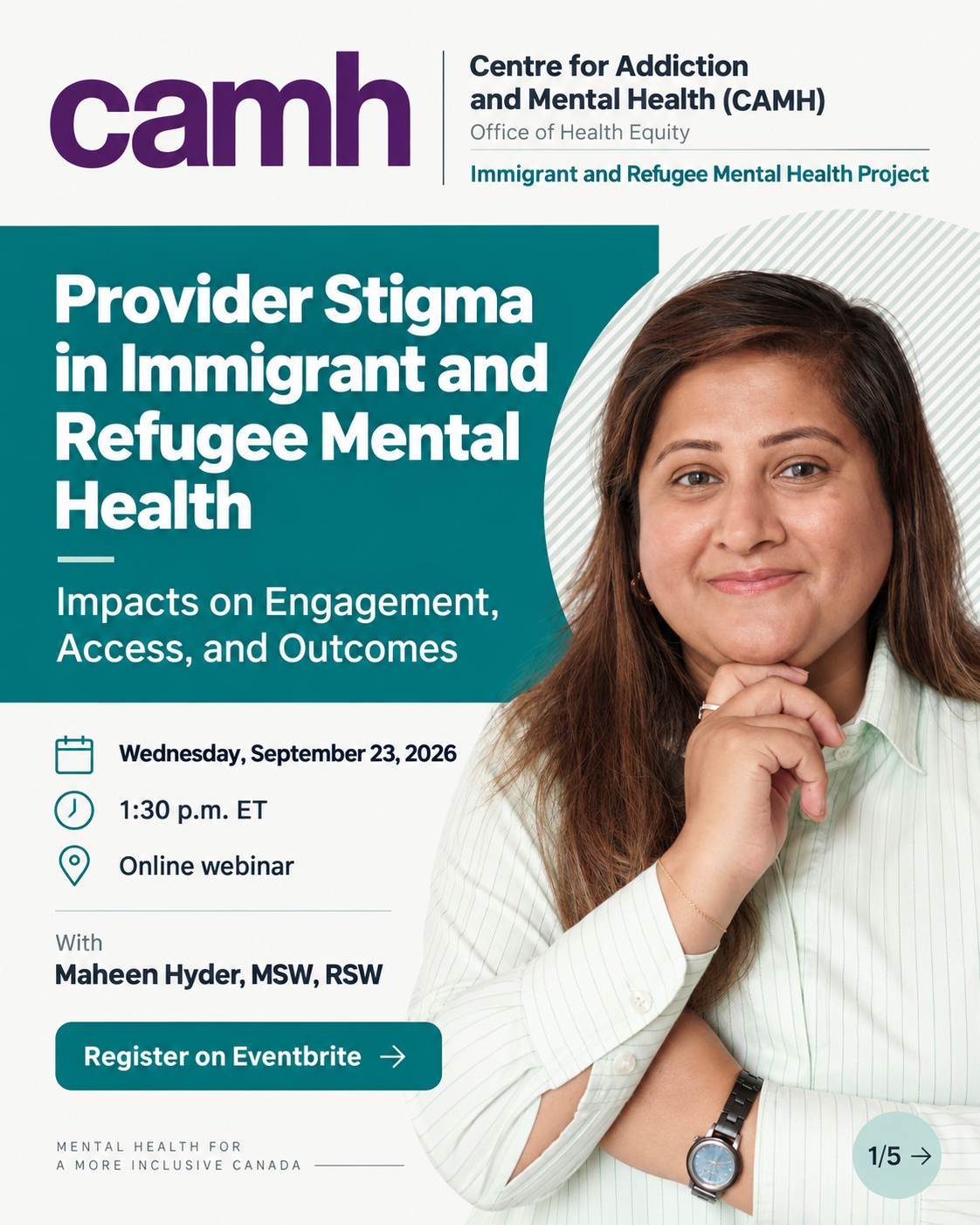
October 3 & 4, 2026
9:00 AM–2:00 PM
Clinical Practice With Refugee Claimants: Assessment, Treatment & Clinical Documentation Across Canada's Refugee Protection System
Two-Day Clinical TrainingAn advanced 2-day training for clinicians working at the intersection of refugee mental health, psychotherapy, assessment, documentation and Canada's refugee protection system.
Topics include trauma and disclosure, forced migration, treatment planning, clinical documentation, support letters, ethical boundaries and practising thoughtfully amid prolonged legal uncertainty.
REGISTER FOR OCTOBER 3–4 TRAININGTraining That Goes Beyond the Checklist
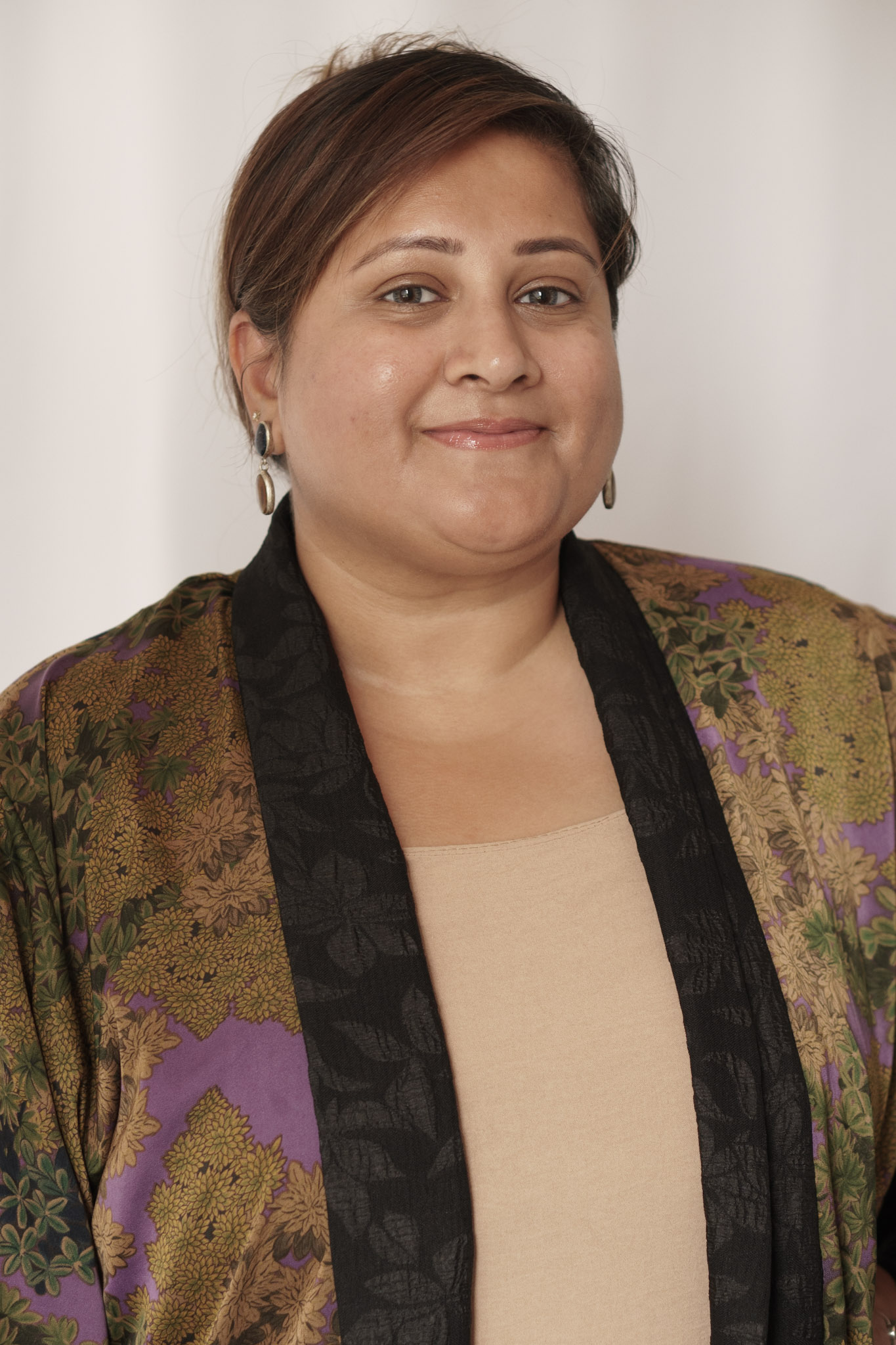
I'm Maheen Hyder (MSW, RSW), a Registered Social Worker, psychotherapist, clinical supervisor and educator with more than a decade of experience across clinical, humanitarian, research and community mental-health settings in Canada and internationally.
My trainings begin with a simple question:
What do practitioners actually need when trauma, migration, language, culture, power and politics are all present in the clinical encounter?
The aim is not to give people another checklist.
It is to strengthen clinical reasoning, contextual understanding and practical judgment so clinicians can respond more thoughtfully to the people and communities they serve.
Training Areas
Training can be adapted to the needs of a particular team, organization or professional audience.
Refugee & Newcomer Mental Health
Clinical practice with refugees, refugee claimants, asylum seekers and newcomers, including forced migration, prolonged uncertainty, family separation, displacement and resettlement.
Complex Trauma, PTSD & Safety
Complex and cumulative trauma, relational trauma, dissociation, emotional dysregulation, suicide risk, safety planning and clinical decision-making.
Cross-Cultural & Interpreter-Mediated Practice
Working across differences in language, culture and understandings of distress — including interpreters, cultural formulation, power, communication and avoiding both stereotyping and "culture blindness."
Beyond Cultural Competence
How race, migration, gender, sexuality, faith, class and power actually shape assessment, formulation, engagement and treatment.
The focus is not on becoming "competent" in someone else's culture. It is on developing the curiosity and judgment required to work responsibly across difference.
Refugee Protection & Clinical Documentation
Assessment, treatment planning, trauma and disclosure, memory, credibility, legal precarity, support letters, progress notes, psychosocial assessments and maintaining appropriate clinical and medico-legal boundaries.
Political Violence, Torture & Forced Displacement
Clinical considerations when working with people affected by torture, detention, persecution, war, political repression, state violence and prolonged threat.
Context Is Clinical Information
Psychological suffering does not emerge separately from the conditions in which people live.
Migration status, racism, language, poverty, family separation, gender, sexuality, colonialism, borders and unequal access to care can all shape the clinical picture.
Good practice requires us to understand those conditions without reducing a person to them.
My trainings ask practitioners to think critically about the frameworks we inherit:
What do they help us understand?
What might they obscure?
Whose assumptions about health, family, safety, autonomy or recovery are built into them?
And what changes clinically when the person in front of us has lived through circumstances those frameworks were never designed to hold?
Training Formats
I offer:
Trainings can be adapted to the experience level, professional roles and actual questions your team is encountering.
Clinical Supervision & Team Consultation
I also provide clinical supervision, case consultation and reflective practice for teams working in refugee-serving, newcomer, community mental-health and related settings.
This can include support around complex trauma, suicide risk, forced migration, interpreter-mediated care, documentation, clinical boundaries, ethical questions and the emotional impact of sustained exposure to difficult material.
Supervision can be offered as a one-time consultation, recurring team supervision, case-based consultation or a combination of supervision and professional development.
Who I Work With
Training and consultation can be developed for:
Mental-health clinicians · Primary-care teams · Hospitals · Community health centres · Refugee and newcomer organizations · Settlement agencies · Universities · Social-service organizations · Clinical supervisors · Non-profits · Professional associations
Bring a Training to Your Organization
If your team is looking for training, consultation, a speaking engagement or ongoing clinical supervision, we can begin with the work itself:
Who are you serving? What are practitioners encountering? What do you want your team to be better able to do?
From there, we can build something useful.