
Maheen Hyder (MSW, RSW)
About Maheen
Maheen Hyder (MSW, RSW) is a Registered Social Worker, Clinical Supervisor, Individual Therapist, Educator, Writer and Complex Trauma Specialist whose work sits at the intersection of mental health, culture, migration, power and the ways people make meaning of their lives.
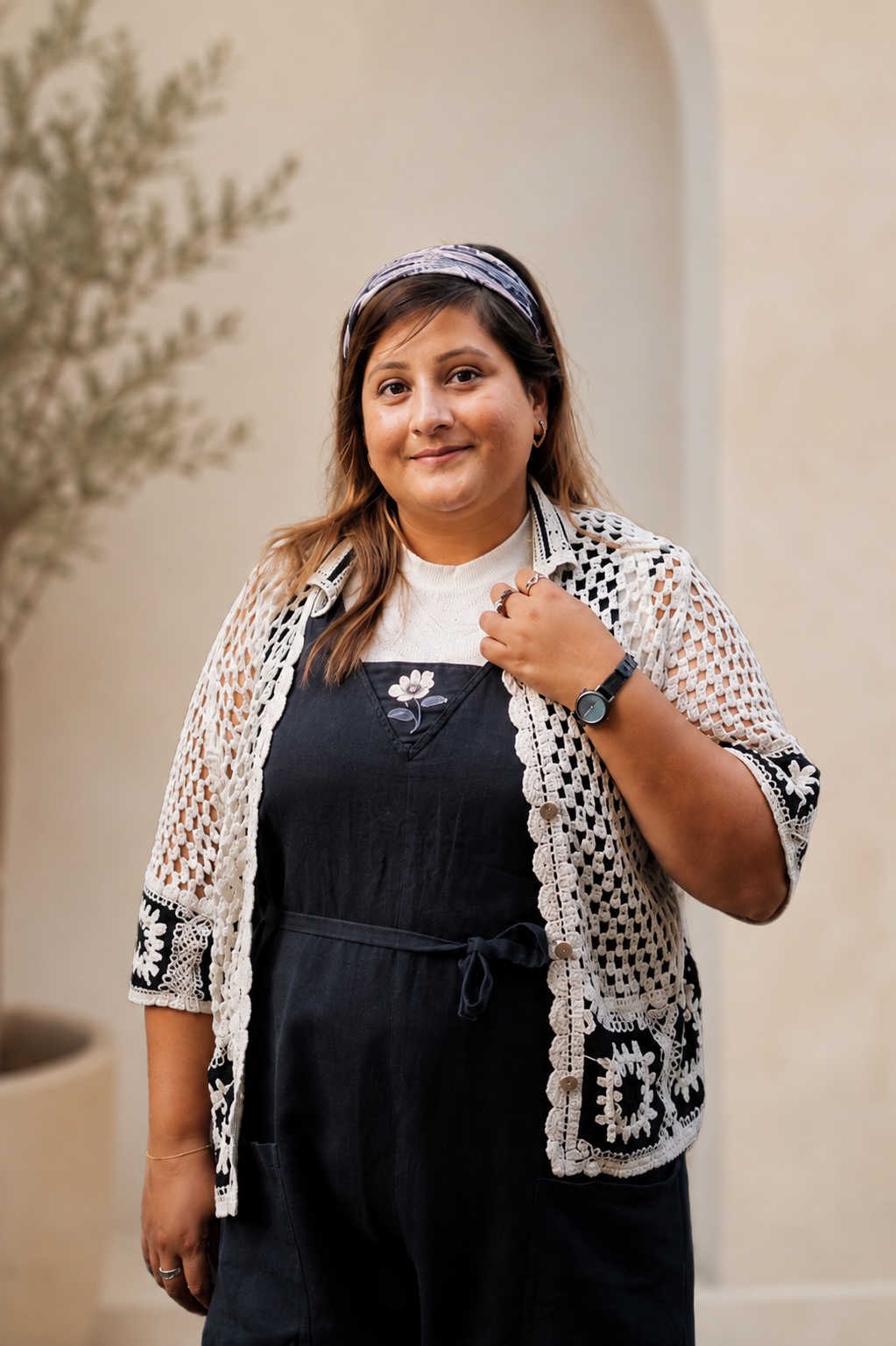
For more than a decade, her work has moved across psychotherapy, humanitarian response, hospitals, refugee-serving organizations, research and community mental health in Canada and internationally. Her clinical practice includes individual psychotherapy, clinical supervision, training and consultation, with particular depth in complex trauma and PTSD, relational and childhood trauma, grief, suicide risk, forced migration, torture rehabilitation, culturally responsive care and the psychological consequences of war, political violence and displacement.
For nearly six years, Maheen provided specialized psychotherapy through Canada's Interim Federal Health Program, working with refugee claimants, asylum seekers, survivors of torture, LGBTQ+ refugees and people navigating persecution, detention, gender-based violence, family separation and prolonged legal uncertainty. Her work in this area has included psychotherapy, psychosocial assessment, crisis and suicide-risk intervention, interpreter-mediated therapy, treatment planning and clinical and medico-legal documentation related to refugee and immigration proceedings.
Her broader professional experience includes Médecins Sans Frontières in Afghanistan, UNHCR in Egypt, St. Michael's Hospital, the Canadian Centre for Victims of Torture, Access Alliance Community Health Centre, York University's Centre for Refugee Studies, El Nadeem Center for Rehabilitation of Victims of Violence and Torture in Cairo, and a refugee-law research placement with the office of Barbara Jackman.
Those experiences inform her work without defining its limits.
Maheen works with people navigating relationships, family, grief, identity, anxiety, depression, trauma, migration, belonging, boundaries, major life transitions and the often complicated work of trying to become more fully oneself. Her clinical approach is grounded in narrative therapy and informed by relational and psychodynamic thinking, Internal Family Systems, Dialectical Behaviour Therapy, Emotionally Focused Therapy, feminist and anti-oppressive practice, and somatic and body-based approaches.
She is interested in the stories people inherit: about who they are supposed to be, what they owe their families, what makes them lovable, what strength is supposed to look like, what they are allowed to want, and what parts of themselves have had to become quieter in order to belong.
Her work is also explicitly politically conscious, anti-oppressive and queer-affirming.
Maheen does not understand psychological suffering as something that exists entirely inside an individual. Family, culture, race, migration, gender, sexuality, faith, class, language, borders, colonialism and unequal access to safety can all shape an inner life.
Taking those realities seriously does not mean reducing a person to their identities or explaining every struggle through politics. It means refusing to treat the world around someone as clinically irrelevant.
She is equally interested in the intimate and ordinary: the relationship you cannot make sense of, the family you love and resent, the grief that changed you, the part of yourself you perform for other people, the life you built that no longer quite fits.
Across therapy, supervision and teaching, Maheen's work asks a similar question:
What becomes possible when we understand people in the fullness of their psychological, relational, cultural and political lives — without reducing them to what has happened to them?
Maheen holds a Bachelor of Arts from the American University in Cairo and a Master of Social Work from York University, with additional training in social and cultural psychiatry through McGill University.
At the centre of her work is a commitment to psychological care that is rigorous, relational and dignified — and to expanding who gets access to that kind of care in the first place.